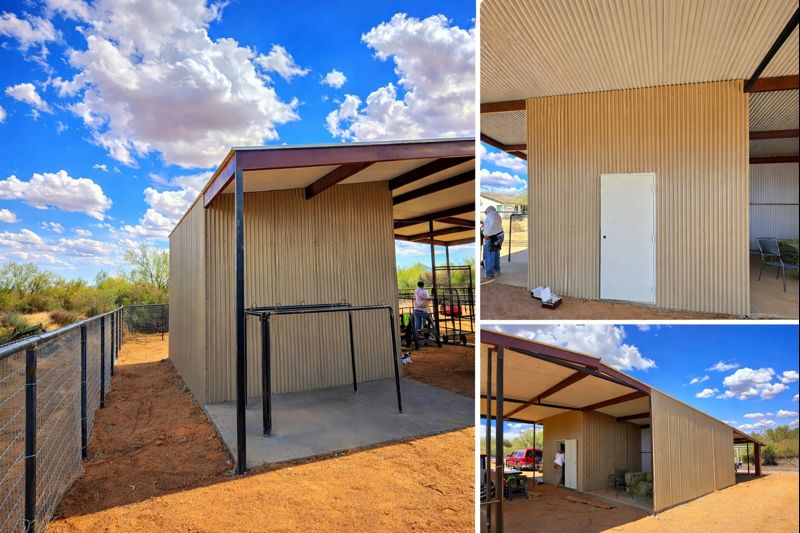
Some projects are “build it and move on.” This one wasn’t. This mare motel was a premium, high-investment facility—the kind where every choice either saves years of headaches or creates them.
The goal wasn’t just a nice-looking structure. The goal was a facility that feels effortless in real life: easy to clean, safe to move horses through, dry where it must stay dry, and built tough enough to handle daily use, weather, and time.
Request a Mare Motel Quote →
Why this mare motel build mattered (and why it was expensive)
“Expensive” isn’t about fancy finishes—it’s about doing the hard parts the right way: correct layout, correct sequencing, and the kind of fabrication that doesn’t wobble, warp, or become a maintenance problem. This project had multiple zones that had to work together like one system: the wash station, the tack room, the hay barn, and a very large shade that included three horse corrals opposite the wash/tack/hay side.
The layout: wash station + tack room + hay barn + shade with 3 corrals
We built the mare motel to function like a clean, efficient loop—not a tight maze. On one side: a triple wash station, the tack room, and the hay barn. Opposite: a massive shade structure with three horse corrals.
The spacing was intentional. This wasn’t “just enough room.” It was designed so you could drive a car between the corrals and the wash/tack/hay area. That one detail changes everything: easier deliveries, easier cleaning, easier access when you’re tired, and less stress when you’re moving horses, equipment, or feed.
What the layout solved
- Traffic flow: no choke points where horses get nervous.
- Work flow: tack and supplies are close, but protected.
- Access: vehicle clearance for hauling, maintenance, and daily chores.
- Comfort: shade coverage where horses spend the most time.
What we avoided on purpose
- Dead-end corners: places horses feel trapped.
- Wet tack storage: water + tack is a slow disaster.
- “Too tight” spacing: looks fine on paper, fails in real life.
- Afterthought concrete: drainage problems that never go away.
The custom welded wash station (built low on purpose)
The wash station was custom welded to be strong, cleanable, and safe. And here’s the fun fact that most people wouldn’t expect: we set that wash station directly into the dirt before the concrete slab was poured.
That sequencing matters. It locks the wash station into the final slab height so the finished result feels intentional—not “added later.” It’s one of those behind-the-scenes moves that makes everything line up cleanly when the project is done.
The tack room: designed to stay dry, even next to a wash bay
If you’ve ever had wet tack, you already know: it’s not just inconvenient—it’s expensive. Mold, stiffness, ruined gear, and that constant battle of “why is everything damp?”
The tack room in this mare motel was designed specifically so the wash station wouldn’t spray water into it. That meant smart placement, practical separation, and a build approach that respects how water behaves in the real world—not how it behaves in a drawing.
- Goal: keep tack storage dry, clean, and predictable.
- Result: wash where you need it—without sacrificing your gear.
The hay barn: storage, access, and day-to-day efficiency
The hay barn was built for what owners actually do: unload, stack, access quickly, and keep things protected. In a facility like this, hay storage is part of the daily rhythm—so it needs to be placed where it’s easy to reach without turning chores into a chore.
Having the hay barn integrated with the rest of the mare motel means the facility works as one system: you’re not dragging supplies across the property or fighting tight turns with equipment.
Concrete work: why we subcontracted it and how sequencing mattered
This project required concrete done correctly—grade, forms, finish, and the kind of execution that holds up. For that reason, we subcontracted the concrete to a concrete company.
The win for the customer is simple: the steel and fabrication are handled by us, and the slab work is handled by specialists who do it every day—so the final product feels tight, clean, and built to last.
- Place the custom wash station in position before pouring the slab.
- Coordinate concrete elevations so finished height and drainage work together.
- Protect the tack room by design (not by hoping people “spray carefully”).
- Keep vehicle clearance in mind from the start—retrofits are expensive.
Details people don’t see: clearance, drainage, and “future-proofing”
The best compliment you can get on a build like this is: “It just works.” And “it just works” usually comes from details most people overlook.
1) Vehicle clearance changes your whole life
We built this mare motel so you can drive a car between the corrals and the wash/tack/hay area. That’s the difference between easy maintenance and constant friction. It’s how you keep the facility feeling open, usable, and calm.
2) Water goes where you tell it to go (or it goes where it wants)
Wash stations, concrete slabs, and storage areas only stay “nice” if water management is designed in. The tack room staying dry wasn’t luck—it was planning.
3) Horse safety is often “boring” on purpose
The wash station being too low for a horse to duck underneath? That’s a perfect example. It’s not glamorous, but it’s the kind of decision that prevents injuries and panic.
Project collage (quick visual recap)
Here’s a quick visual recap of the build. (If you don’t already have the collage saved in your /pics folder,
upload it and keep this filename.)
FAQ
Why design the tack room to stay dry next to a wash station?
Because water ruins tack over time—mold, stiffness, corrosion, and constant maintenance. A tack room should be a clean, dry “control center,” not a splash zone.
Why subcontract the concrete?
Concrete is its own trade. On a high-end, expensive build, getting the slab, finish, and elevations right is non-negotiable. Subcontracting to a concrete company helps ensure the foundation matches the quality of the steel work.
What’s the benefit of leaving enough space to drive through?
It improves everything: deliveries, cleaning, vet/farrier access, equipment movement, and day-to-day chores. Tight layouts look fine on paper and feel bad forever.
Why make the wash station too low for a horse to duck under?
Safety. Horses explore and squeeze into places they shouldn’t—especially when stressed or curious. That “too low” design prevents a dangerous scenario before it can happen.
Contact Stallion Steelworks →
Disclaimer: This post is educational and describes one specific project approach. Always follow local code requirements, site conditions, and safety best practices for equine facilities.